Sign Language
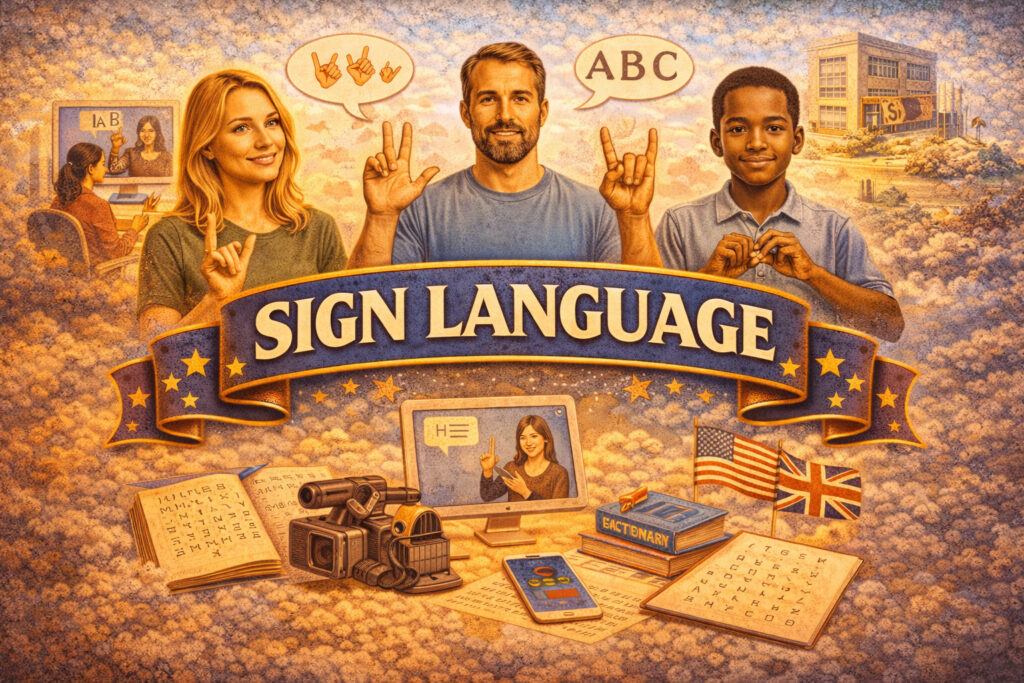
Sign Language tutoring supports communication for individuals who are deaf or hard of hearing, as well as family members, educators, and professionals seeking inclusive communication skills. American Sign Language (ASL) is the most commonly studied form in the United States.
If you’re searching for a “Sign Language tutor near me,” “ASL lessons online,” or “learn ASL conversation,” personalized tutoring helps develop expressive and receptive signing skills.
Sign Language tutoring may include:
- ASL alphabet and finger spelling
- Basic vocabulary and phrases
- Conversational fluency
- Facial expressions and non-manual markers
- Deaf culture awareness
- Academic ASL coursework support
Because sign language relies on visual grammar and facial expression, one-on-one tutoring provides essential real-time feedback.
Benefits:
- Improved communication accessibility
- Stronger conversational confidence
- Support for school or interpreter pathways
- Greater cultural awareness
FAQ
What does a Sign Language tutor help with?
A Sign Language tutor helps students learn how to communicate using visual language systems such as American Sign Language (ASL). Tutors teach finger spelling, vocabulary, sentence structure, facial expressions, and conversational signing skills.
What topics are covered in Sign Language tutoring?
Sign Language tutoring may include the ASL alphabet, finger spelling, basic vocabulary, conversational phrases, facial expressions and non-manual markers, grammar structure, Deaf culture awareness, and receptive signing practice.
Is American Sign Language the same as English?
No. American Sign Language (ASL) has its own grammar, sentence structure, and linguistic rules that differ from spoken English. ASL is a complete language with its own syntax and visual communication patterns.
Why are facial expressions important in ASL?
Facial expressions and body movements are essential parts of ASL grammar. They help convey tone, emphasis, and question structure, making communication clearer and more expressive.
Can Sign Language tutoring help beginners?
Yes. Tutors often start with the ASL alphabet, finger spelling, and basic vocabulary, gradually building toward full sentence formation and conversational signing.
Who should consider Sign Language tutoring?
Sign Language tutoring is helpful for deaf and hard-of-hearing individuals, family members learning to communicate with loved ones, educators, healthcare professionals, interpreters in training, and anyone interested in inclusive communication.
Is online Sign Language tutoring effective?
Yes. Video-based tutoring allows students to clearly observe hand shapes, movements, and facial expressions while receiving real-time feedback from instructors.